Fly On The Wall is an independent label, founded in 2026 by guitarist, filmmaker and producer Stewart French. It is the evolution of a studio that has, since 2015, produced more than three hundred classical music sessions, captured in audio and documented in film.
The qualities of what began as a small cultural enterprise were noticed early. At launch in 2015, the critic Norman Lebrecht reported on Slipped Disc about Fly On The Wall’s first video, a “stunning account of Bartók’s Romanian Folk Dances” by Cédric Tiberghien. Within a year, Classic FM had taken Fly On The Wall as a featured series, describing French as one of the “visual wizards” capturing the “biggest names in classical music.” French, then aged 34, had trained as a classical guitarist at the Royal Academy of Music, receiving the DipRam, the Academy's highest performance award, before recording as a performer for Harmonia Mundi USA, Naxos and Universal. He had become intensely preoccupied with the great recordings of Gould, Kempff, Perahia, Brendel and David Russell, and with the Decca catalogue and the sessions from which it had been built. From 2010 he worked alongside the producer Andrew Keener and the engineer Simon Eadon, learning the precision and focus of the highest standard in classical recording. The catalogue included multiple albums for Marc-André Hamelin and Boris Giltburg (Hyperion/Naxos), several BBC Music Magazine Albums of the Month, and an NPR Top 10 Album of 2016. He now started to record artist sessions himself, capturing each performance complete and on film.
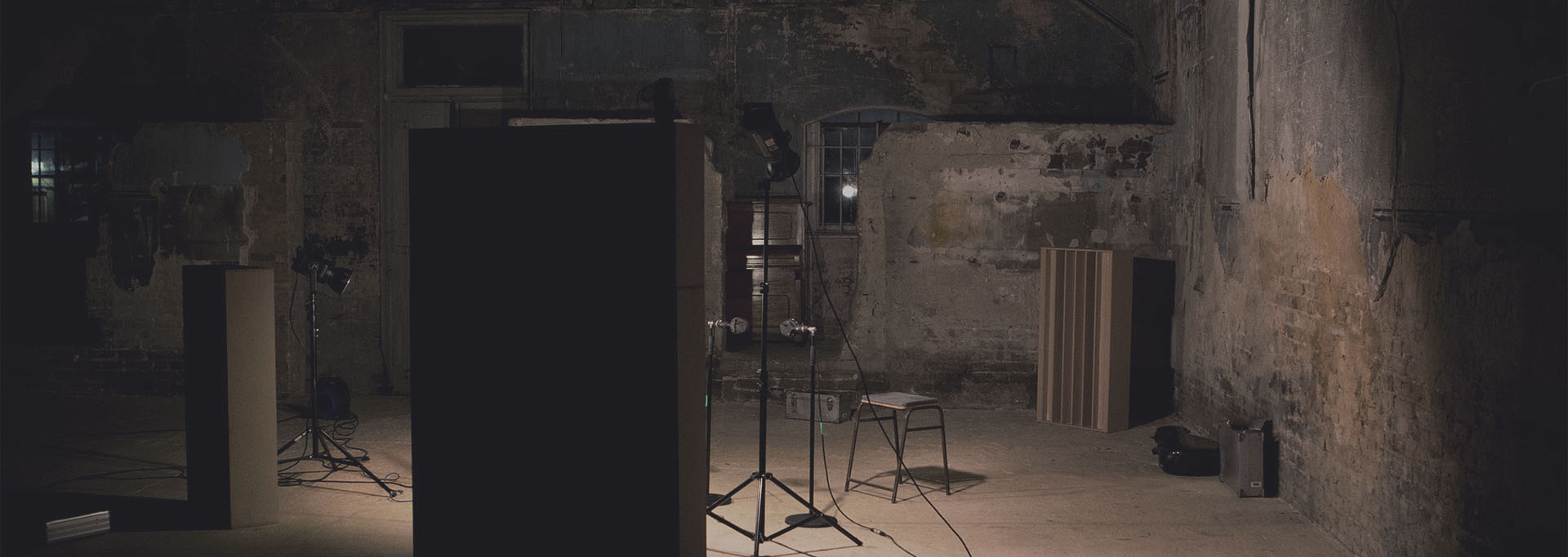
From the first session, the methodology has been the same: complete musical performances, captured by a small number of carefully placed microphones, with a single handheld camera filming alongside. Sessions with Steven Isserlis, Marc-André Hamelin, Angela Hewitt, Alina Ibragimova, Richard Goode, Boris Giltburg, Pavel Kolesnikov, Cédric Tiberghien, the Doric Quartet, the King’s Singers and the Colin Currie Group established Fly On The Wall as a body of work. By the late 2010s the practice was being commissioned at increasing scale: the eleven-hour Beethoven32 cycle with Boris Giltburg for Naxos – the first extended application of the session discipline, released as both films and albums – the Live at the V&A film with Viktoria Mullova and the Academy of St Martin in the Fields, and projects for the British Library, the Science Museum, Apple Music, the London Chamber Orchestra and Bechstein. In 2025 the body of work was curated as The Collection (2015–25), an online exhibition presenting fifty-six sessions selected from more than three hundred.
Across that decade, the editorial position of Fly On The Wall was gradually recognised in the classical music press. Reviewing The Collection (2015–25) for Classical Music magazine, the critic Stephen Pritchard pinpointed what the studio had been attempting throughout: “It feels almost as though we have intruded into a private, sacred space, and yet we are allowed to stay, to observe and to share in this glorious music.” Limelight described the project as capturing “classical musicians at their most unguarded”, and Gramophone as “a vivid portrait of classical music in the UK and Europe today”.
The label is the natural evolution of this work. Fly On The Wall launches in 2026 with a small number of releases, the first instalments of an editorially curated catalogue that adheres to the session discipline of the films. The label exists to do for audio what the studio has done for film: to place the listener in the room with real human performances. Every decision – sonic, setting and scene – is designed to capture the inherent energy, risk and experience of a lived performance.
As Stewart French puts it: “Each project is conceived as both an event and a record — an attempt to capture real lived performance in the studio or the concert hall; to convey what it truly felt like to be present when it happened.”